Water in your speaker? Dust in the mic? Earbuds sounding muffled? Eject Pro clears them in seconds with precise sound — for your iPhone speaker…
Download on the App Store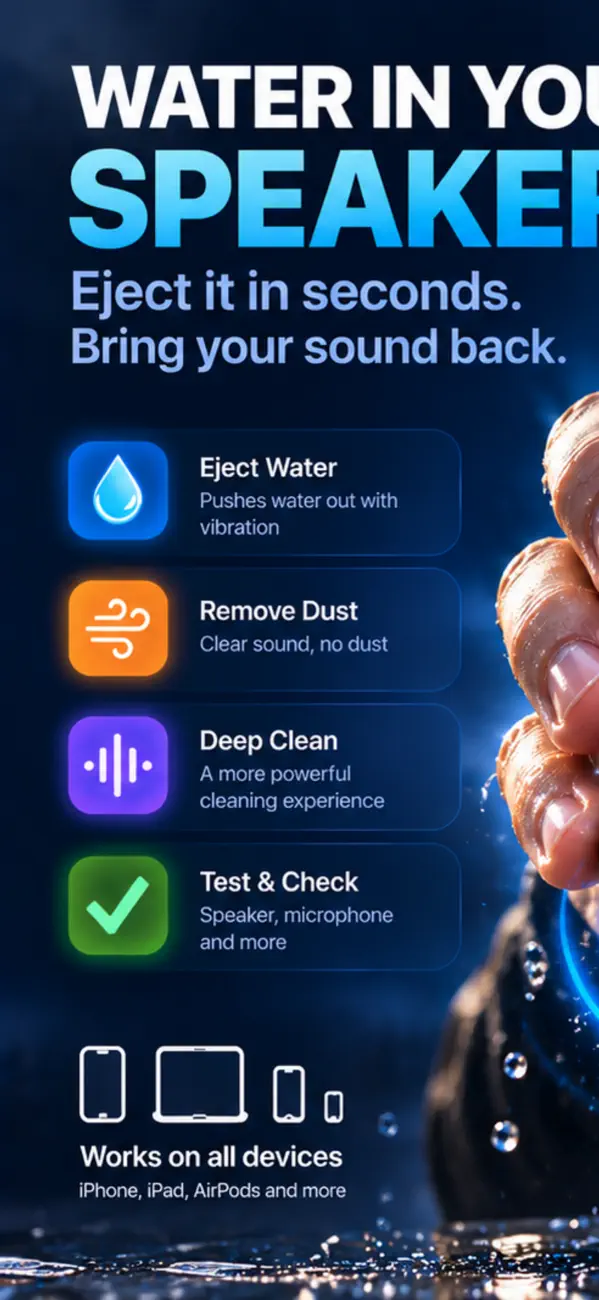
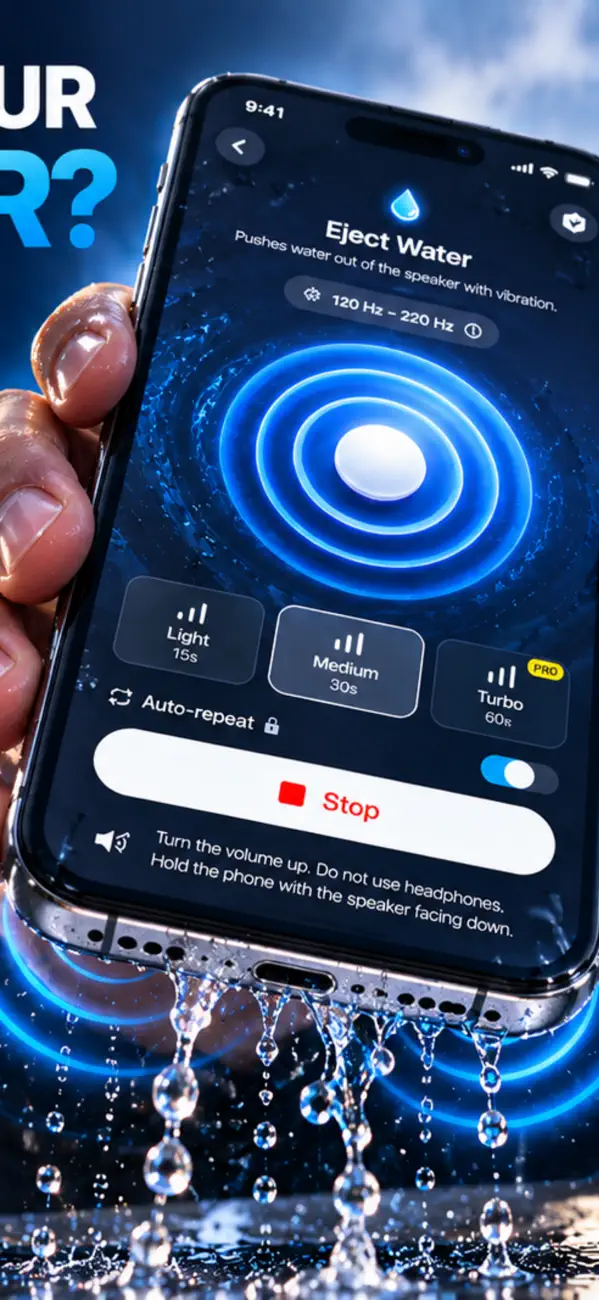

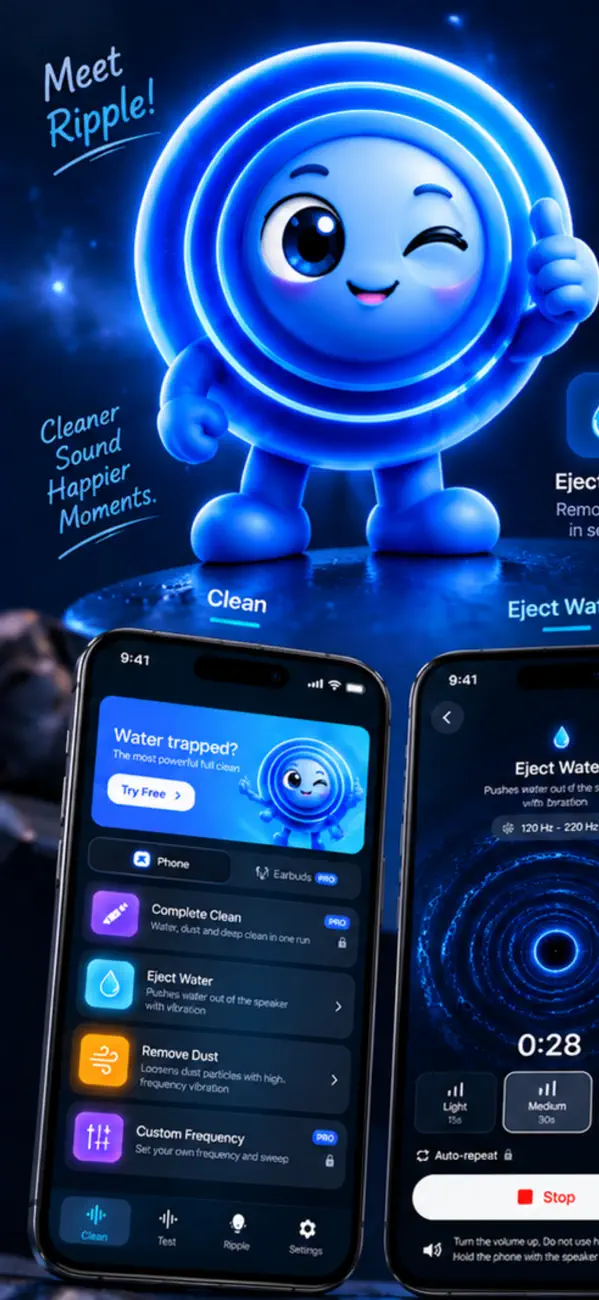
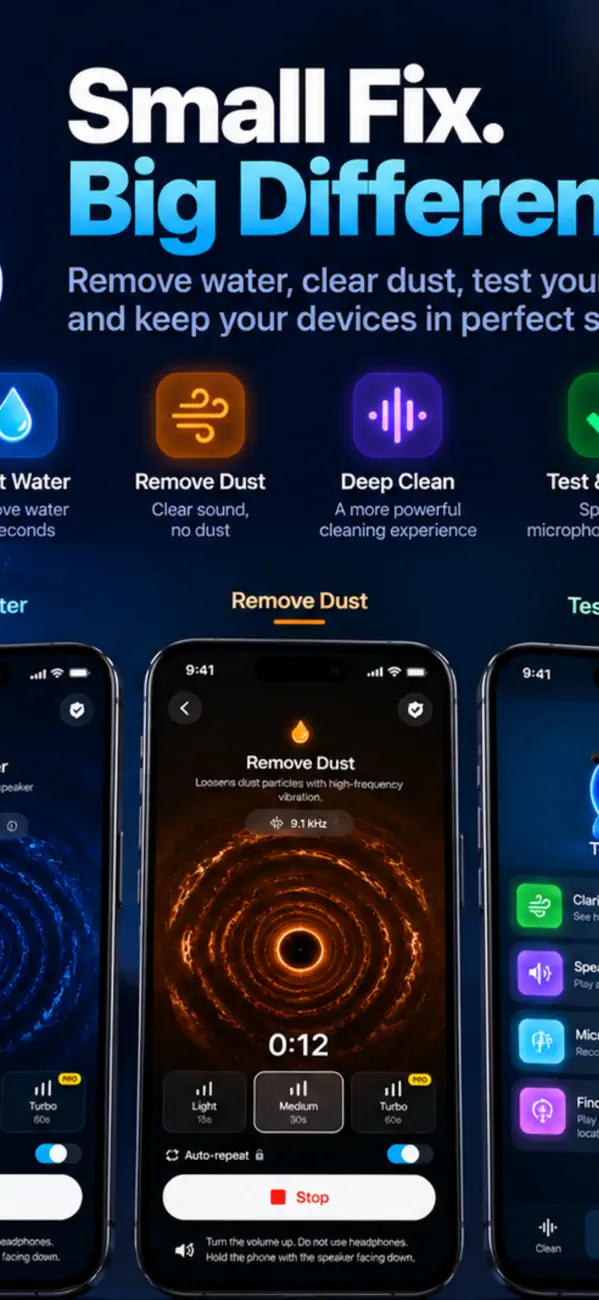
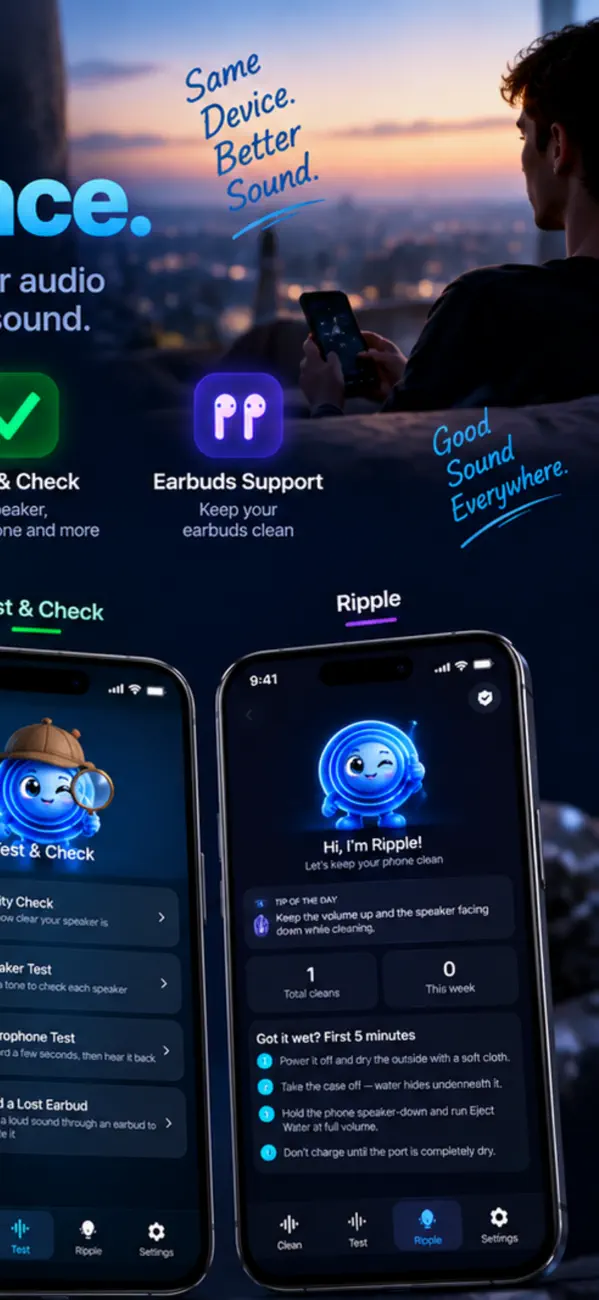
• Eject Water — low-frequency vibration pushes trapped water out
• Remove Dust — high-frequency sweep loosens dust and debris
• Complete Clean — water, dust & deep in one tap (Pro)
• Custom Frequency — set your own Hz (Pro)
• Clean your phone's speaker & microphone
• Clean AirPods & earbuds — left and right separately
• Find a Lost Earbud with a loud locator tone
• Speaker Test — hear left & right clearly
Water in a speaker muffles sound because the grille traps a film of liquid over the driver. The fix is mechanical, not magical — and most of the popular advice on the internet is either useless or actively harmful.
Yes, and the mechanism is simple. A low-frequency tone makes the speaker cone travel further than normal, and that movement pushes air — and the water sitting on it — outward through the grille. Apple Watch has used the same trick for years with its Water Lock feature.
It works best while the phone is held speaker-down so gravity helps. Expect to repeat the cycle a few times; one pass rarely clears everything.
No, and Apple explicitly advises against it — rice dust and starch can get into the ports. Rice absorbs ambient humidity slowly, but it cannot pull water out of a sealed cavity, and while you wait the water is still sitting on the electronics.
Modern iPhones are water resistant, so the problem is usually trapped water in the speaker and charging port, not a flooded logic board. Getting the water out beats trying to dry it in place.
Power it off if it is not already. Wipe the outside dry and hold it speaker-down, tapping gently against your palm to drain the port. Do not charge it — pushing current through a wet connector is what actually causes damage, and iOS will usually refuse with a liquid-detected warning.
Do not use a hairdryer or compressed air either: heat damages seals and pressure drives water deeper into the assembly.
Dust is a different problem from water. It packs into the mesh and dampens high frequencies, which is why voices start sounding distant. A high-frequency sweep vibrates the particles loose so they can fall out.
Combine it with a soft dry brush on the grille — never a pin or a toothpick, which pushes debris through the mesh and can pierce it. Eject Pro's dust mode runs the sweep; the brushing is on you.
Partly. Earbuds collect earwax as well as moisture, and wax will not vibrate out. Clean the mesh first with a dry soft brush, then run a cleaning tone with the buds out of the case.
If only one side is quiet and cleaning changes nothing, it is usually a blocked mesh that needs replacing rather than a water problem.
Water resistance is a rating, not a promise, and it degrades with age as seals and adhesives wear. An iPhone rated IP68 when new is not guaranteed to be after two years of drops and temperature cycles.
Rinse with clean water after seawater or chlorine exposure — salt and chlorine leave residue that keeps corroding after the water is gone — then dry and run an eject cycle.
The download is free, but Water Eject Pro: Clean Speaker has in-app purchases. • Weekly includes a 3-day free trial
Water Eject Pro: Clean Speaker runs on iPhone and iPad and requires iOS 16.0 or later.
The download size is 18 MB.
The current version is 1.9.6, released on 2026-09-19.
Water Eject Pro: Clean Speaker is available in Arabic, CS, DA, Dutch, English, FI, French, German and more.
Water Eject Pro: Clean Speaker is built by BIR (Build Intelligent Reality), an independent software studio founded by Birkan Aksoy. BIR has 38 apps on the App Store.
Straight answers — no app required.
All questions →