
dB Meter turns your iPhone into a fast, beautiful, and accurate sound-level meter. Measure the noise around you in real time — at home, at work, at a…
Download on the App Store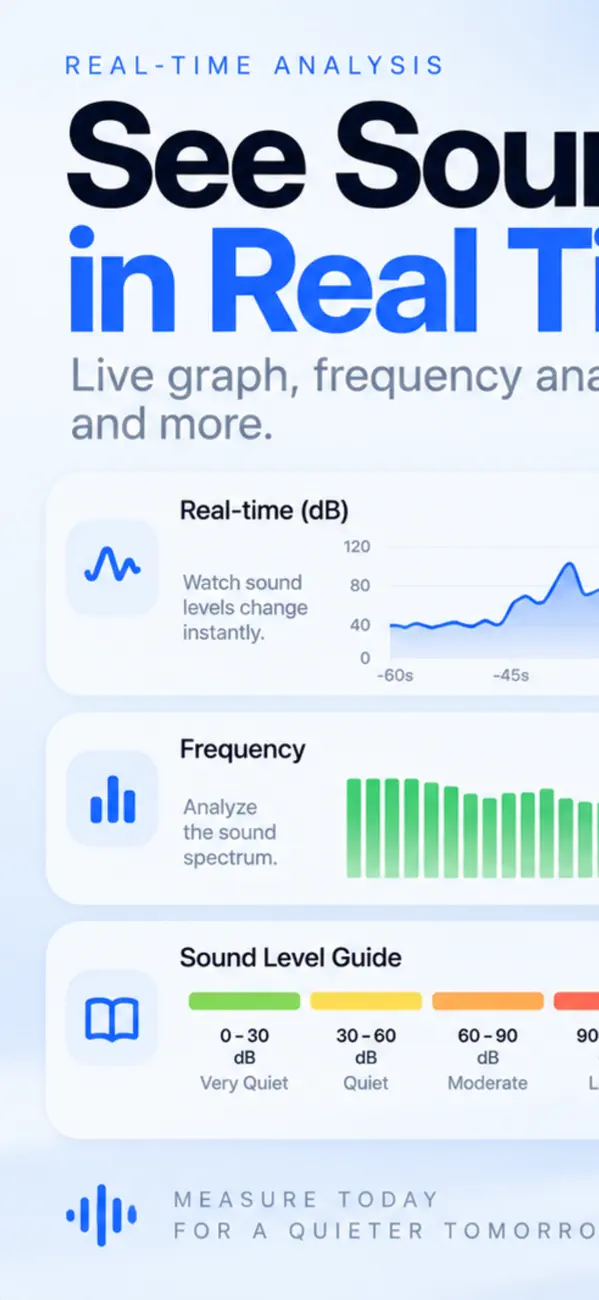

No ads. No tracking. Completely free.
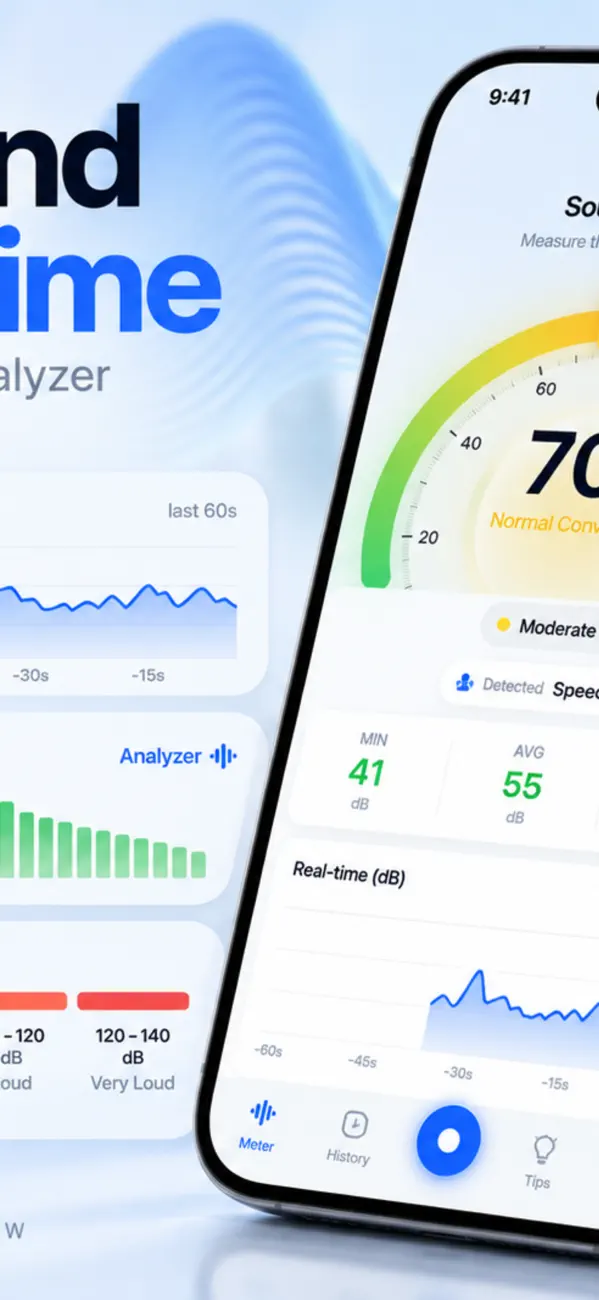
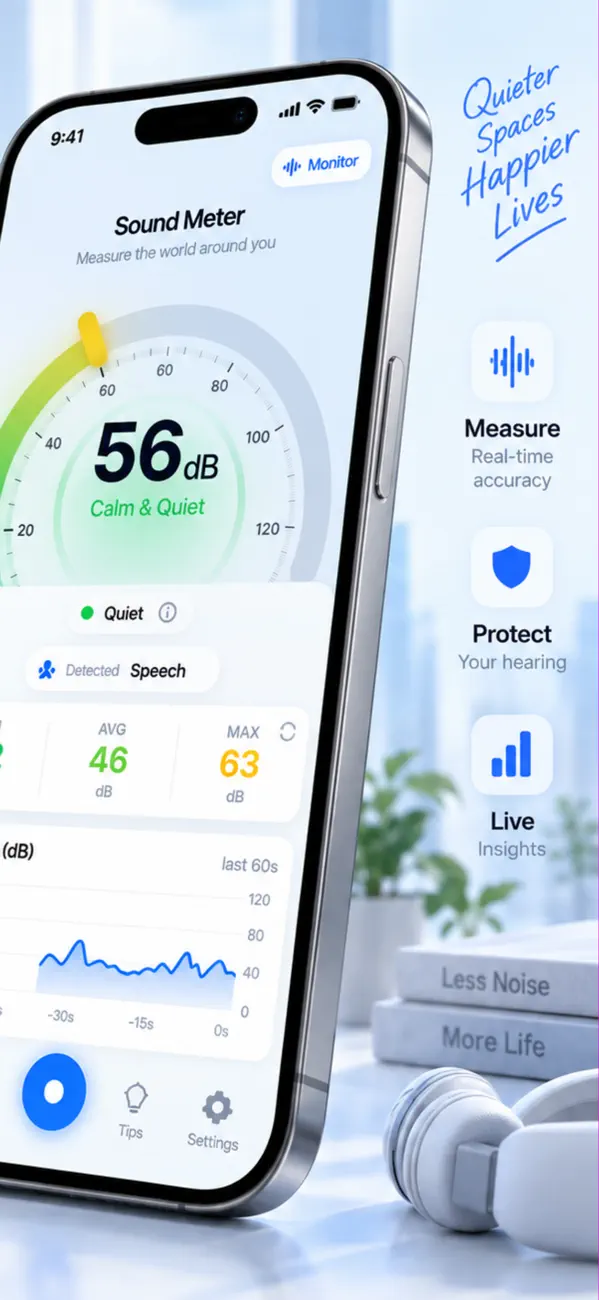
• Real-time decibel readings on a precise speedometer-style gauge
• Smooth, sound-reactive animations that come alive with the noise around you
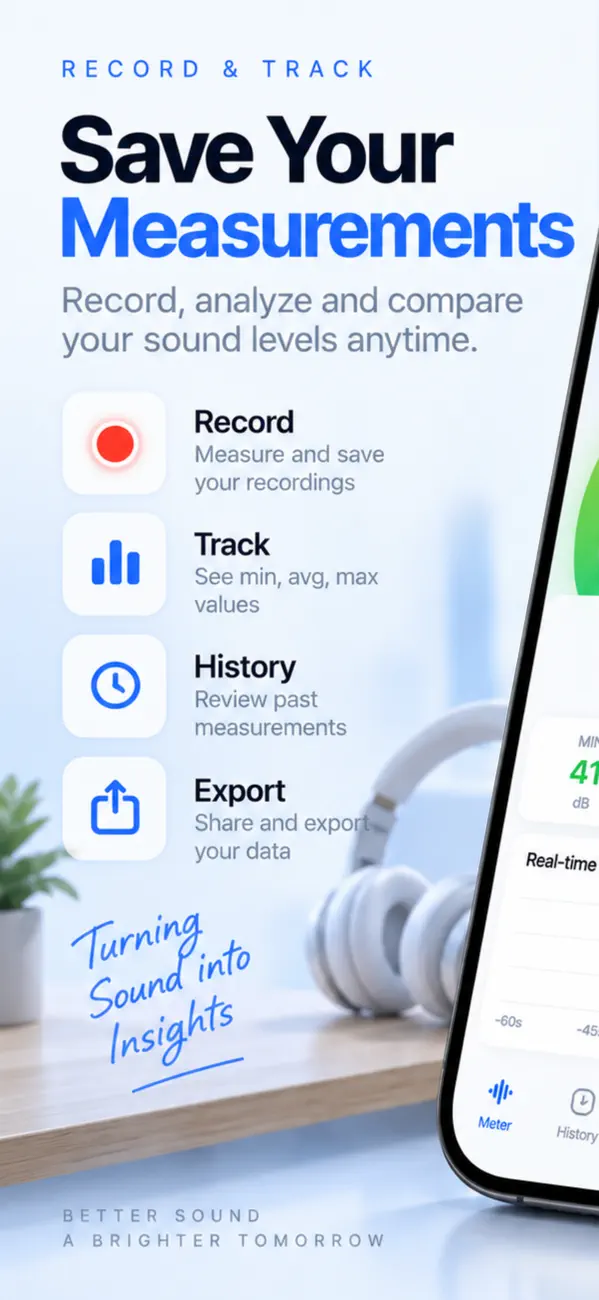
• Min, average, and max stats plus a rolling 60-second graph
• A-weighting (dBA) to match how the human ear hears, like professional meters
• Adjustable calibration so readings fit your device
• Leq (equivalent continuous level) for recorded sessions
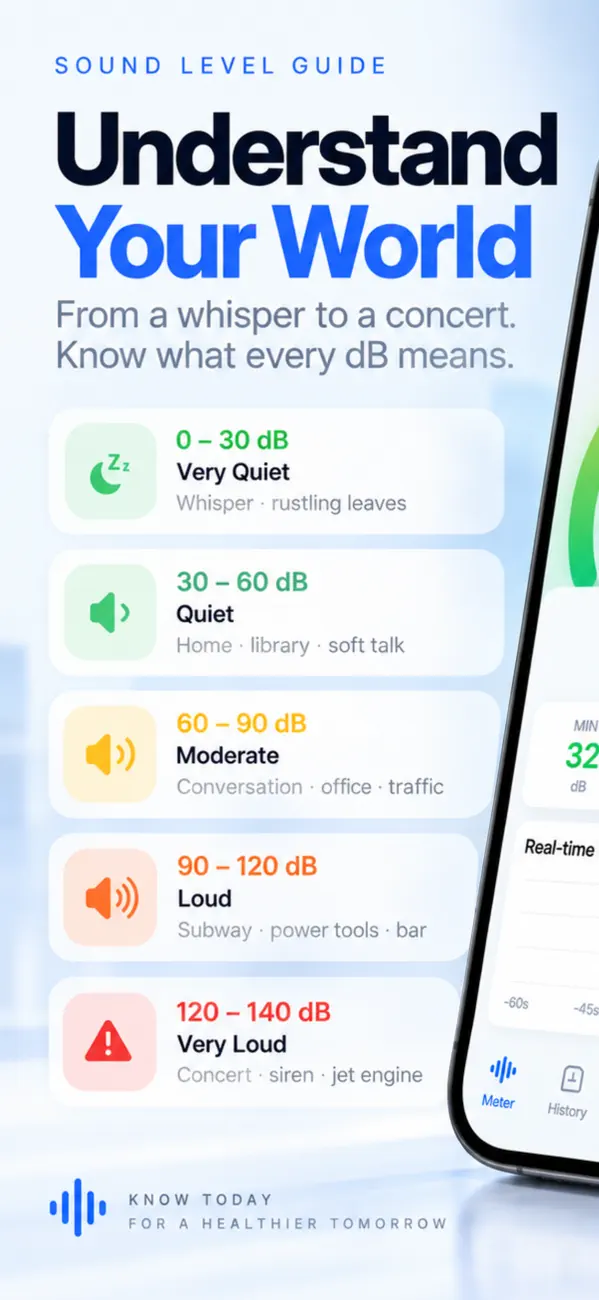
• Clear noise categories from Very Quiet to Dangerously Loud
Decibels are not intuitive, because the scale is logarithmic. That one fact explains why a small number on the display can mean a very large change in what you are hearing.
The widely used guidance is 85 dB for eight hours. Because the scale is logarithmic, every 3 dB doubles the sound energy and roughly halves the safe exposure time: 88 dB for four hours, 91 dB for two, and so on.
For reference, normal conversation sits around 60 dB, city traffic near 80, and a concert can pass 110 — where damage starts in minutes, not hours.
Reasonably, within limits. Phone microphones are tuned for speech and compress loud input, so readings above roughly 100 dB tend to under-report. A case covering the microphone will skew results, as will wind.
For comparing rooms, checking whether a workplace is uncomfortable, or seeing how loud a café really is, a phone is fine. For legal or occupational compliance you need a calibrated Class 1 or 2 meter.
dBA weights the measurement to match human hearing, which is less sensitive to very low and very high frequencies — it is the number most guidelines refer to. Peak is the single loudest instant, useful for sudden impacts.
Average over time is what matters for exposure. A quiet room with one door slam is not a loud room, even though its peak says otherwise.
Hold the phone at ear height, away from your body, with nothing covering the microphone. Measure for at least a minute — noise fluctuates, and a one-second reading tells you almost nothing.
Take readings at several points. Sound levels vary enormously across a room depending on reflections and how close you are to the source.
dB Meter: Sound Level is a paid app priced at $12.99 on the App Store — a one-time purchase, not a subscription.
dB Meter: Sound Level runs on iPhone and iPad and requires iOS 17.0 or later.
The download size is 4 MB.
The current version is 1.3, released on 2026-09-12.
dB Meter: Sound Level is available in Arabic, CA, HR, CS, DA, Dutch, English, FI and more.
dB Meter: Sound Level is built by BIR (Build Intelligent Reality), an independent software studio founded by Birkan Aksoy. BIR has 38 apps on the App Store.
Straight answers — no app required.
All questions →


